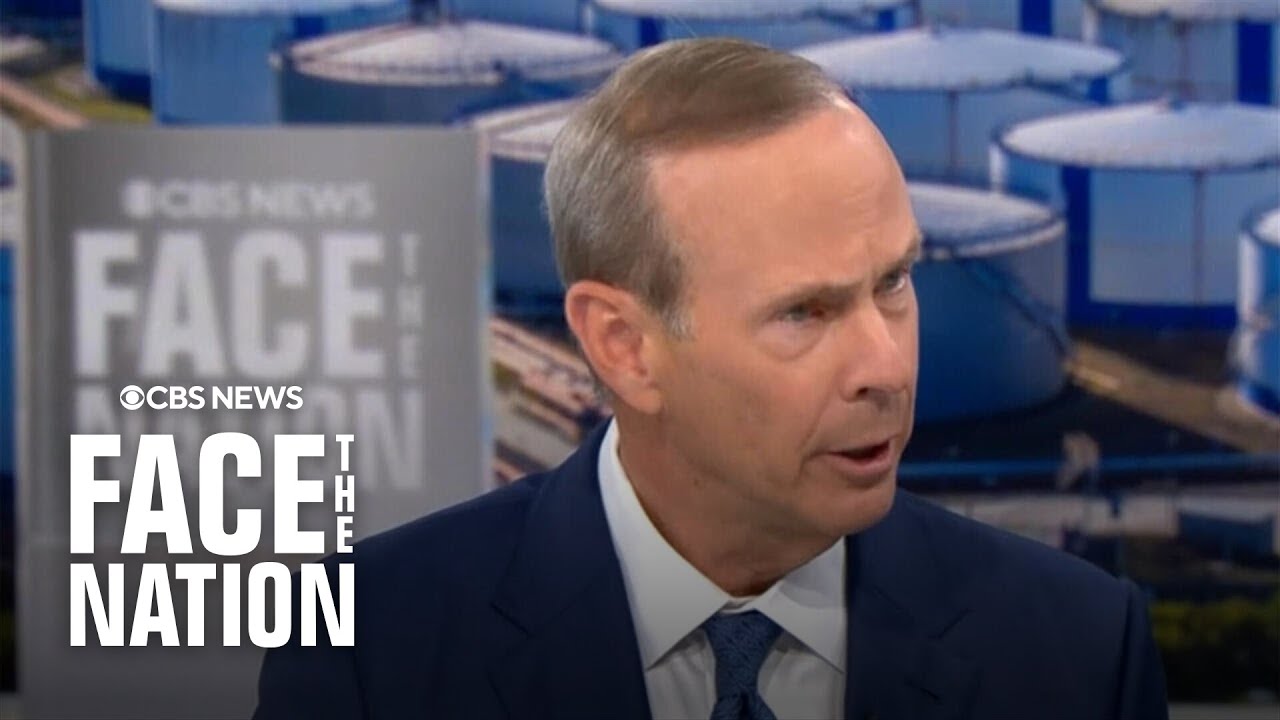
Chevron chief executive Mike Wirth has told CBS Face the Nation that the global jet fuel market is tightening faster than the wider energy complex, and that travellers and airlines should expect the situation to deteriorate before it improves.
"Inventories of jet fuel in certain parts of the world were at seasonally relatively low levels before the conflict began," Wirth told moderator Margaret Brennan. "The Middle East refiners are significant exporters of jet fuel, particularly to Europe, where 75% of Europe's imported jet fuel tends to come from those refineries. It's not flowing today."
That single supply chain accounts for more of Europe's aviation fuel than any other origin, and the substitution problem is acute. "We are seeing jet fuel tighten very quickly in Europe, in Asia, and we're seeing airlines announce adjustments to their flight schedules. We're seeing it flow through into fares," Wirth said.

Asked specifically how the crunch will be felt by consumers, Wirth was direct. "I think aviation is clearly an area where it's going to probably get worse over the next few weeks," he said.
The comments add a new operational data point to the dispute between the White House and energy markets. Several senior administration officials have suggested gasoline prices will retreat over the coming months. Brennan said that was not her takeaway from the conversation. "That was not my understanding after having this conversation," she said. "In fact, Wirth told us it's really hard to make any kind of assumption because the dynamics affecting supply are so unusual."
The Strait of Hormuz remains the choke point. Roughly 20% of global oil supply moves through the strait, and Wirth said Chevron is not yet prepared to send vessels through the corridor. He said he expects the US Navy to escort the first ships when conditions allow, but that the operator's threshold is unambiguous. "If there is a risk to personnel or the vessel from an Iranian launch of a missile or from a mine, no way, no go," Brennan paraphrased the executive as telling her.
Wirth also flagged the structural problem behind the volatility. Jet fuel has a shorter shelf life than gasoline, which means storage has to refresh and replenish more frequently. With Middle Eastern refineries offline as exporters, the buffer that normally absorbs a price shock is being drained.

For consumers, Wirth said the practical consequence is fewer seats and more expensive ones. "I think planes will probably be more full than they would have been. And yes, fares could be higher," he said. "The upward pressure that they're seeing on prices and the tightness in the market is likely to lead to further route optimisation."
The Trump administration's response has been to lean on emergency tools. The president has tapped the Strategic Petroleum Reserve, temporarily lifted some sanctions, and on the same day Wirth's interview aired extended a Jones Act waiver allowing non-US flagged ships to call at American ports. The Jones Act is a 1920s law that normally requires vessels travelling between US ports to be American-built, American-owned, and American-crewed.
For airlines, the read is the one Ryanair's Michael O'Leary made earlier this week. Carriers without large hedge books are about to find out how much of the price spike they can pass through before demand breaks. Chevron's CEO has now told a national audience that the worst of the supply tightness is still ahead.