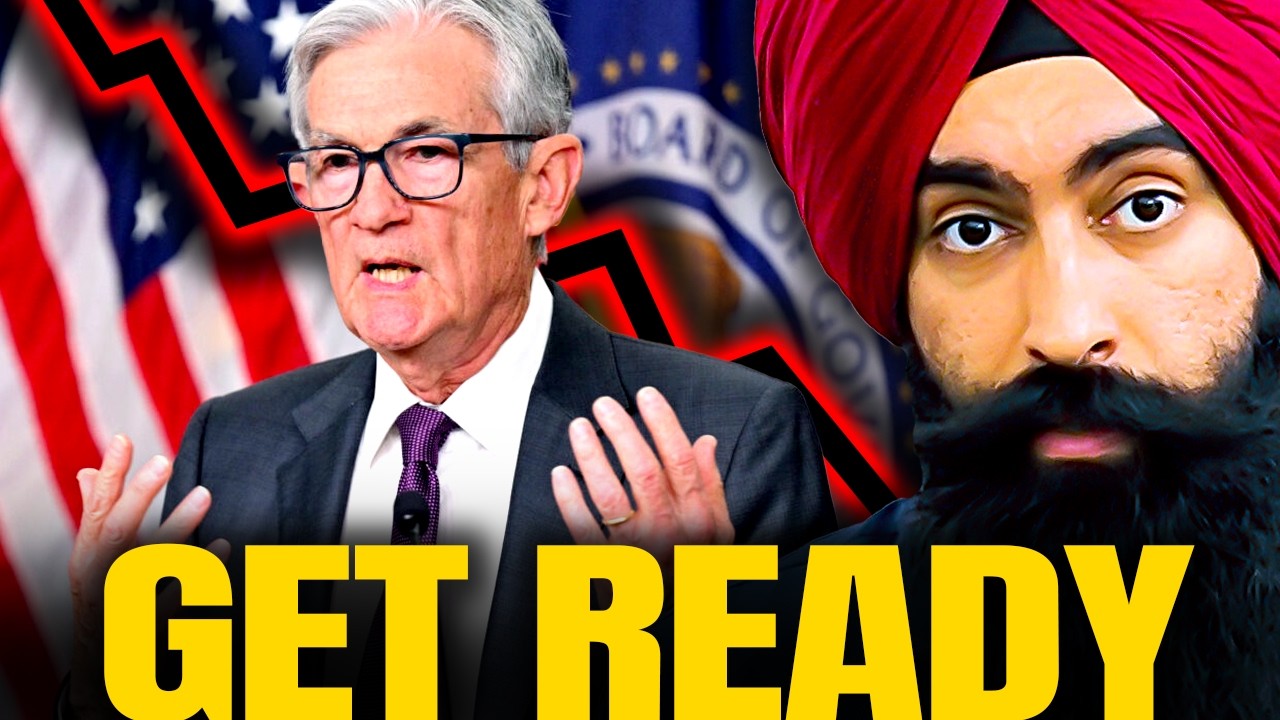
The Federal Reserve left its benchmark rate range unchanged at the 29 April FOMC meeting in what officials described as the most fractured vote in decades, with one camp arguing the central bank must hike to defend the dollar and another camp pushing for cuts to keep the expansion alive.
The split is the clearest sign yet that the post-Iran-war policy consensus has broken down. Inflation has reaccelerated alongside the surge in jet fuel and crude, while the labour market is starting to show cracks under the weight of a still-restrictive policy stance.
The bigger market-moving development came after the decision was announced. Outgoing chair Jerome Powell, whose term expires on 15 May, told the press conference that he will not be leaving the Federal Reserve Board when he steps down as chair.

"I will not leave the Board until this investigation by the Department of Justice is well and truly over with transparency and finality," Powell said.
That single line scrambles the political calculus around incoming chair-designate Kevin Warsh, who President Trump nominated on the explicit promise that he would deliver lower interest rates. Warsh, who told the Senate during his confirmation hearing that 'QE is reverse Robin Hood', will inherit the gavel but not a clean slate. Powell's vote remains on the board, and his influence over the rest of the FOMC remains intact.
"The idea was that President Trump was going to get a new vote and that's going to help sway the Federal Reserve Bank to cut interest rates," said Jaspreet Singh of Minority Mindset. "But now, because of this investigation by the Department of Justice, it looks like Jerome Powell is going to step down as the chairman, but he's not going to be leaving the Federal Reserve Bank, which means his influence will still be there."
Underlying the squabble is a structural problem the Fed can no longer ignore. The US national debt now sits above $39 trillion, and the Treasury is paying more than $1 trillion a year in interest on that pile. Roughly 20 cents of every federal tax dollar collected now goes straight to bondholders rather than to programmes or services.

That dynamic is forcing what some inside the building are calling a duality of mandate. The Fed's Congressional mandate is price stability and full employment. In practice, the central bank is now also functionally responsible for managing the cost of servicing the federal debt, because every quarter point on the funds rate translates into tens of billions of dollars in extra interest expense for the Treasury.
For markets, the immediate read is that the easing cycle priced into the front of the curve is on shakier ground than it was 24 hours ago. With Powell still on the board and at least one or two voters openly arguing for a hike, the path to two cuts before year-end now requires a clearer economic deterioration than the data has so far delivered.
The broader takeaway is institutional. For the first time in a generation, the Federal Reserve has voted on rates while one wing of the FOMC publicly worries about the dollar, another worries about the labour market, and a third worries about the political process that produces the next chair. That is not a normal handover.