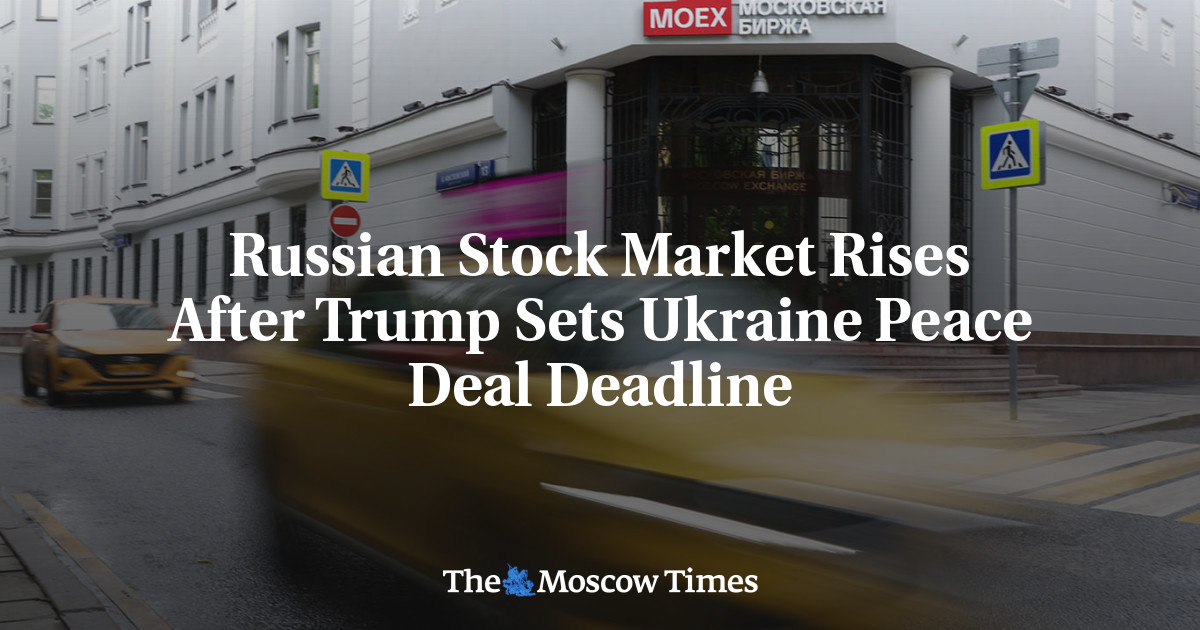
Russia's stock market experienced a surge of more than 1% on Tuesday morning in response to an ultimatum issued by U.S. President Donald Trump. Trump's announcement emphasized that he would impose 100% tariffs on Russian energy exports if the Kremlin did not agree to a peace deal in Ukraine within the next 50 days.
This uptick in the stock market built on a 2.7% increase seen during after-hours trading on Monday, following Trump's statements. The news also provided a much-needed boost for the ruble, which recovered slightly against both the dollar and the Chinese yuan.
By 10 a.m. Moscow time on Tuesday, the MOEX Index had risen by 1.18%, reaching 2,746 points, while the dollar-denominated RTS Index rose 1.2% to settle at 1,104. Some of the major contributors to this rally included shares from companies like gold miner Polyus, shipping giant Sovcomflot, state lender VTB, and MD Medical Group, all increasing by approximately 1.8%.

In the currency markets, the ruble appreciated by 0.24% against the U.S. dollar, trading at 77.91, and also saw a slight increase against the yuan, now valued at 10.87. This response reflects traders' reassessment of geopolitical risks following Trump’s ultimatum.
Vasily Karpunin, chief analyst at Alfa Bank’s investment division, noted, "Trump's 50-day grace period on potential secondary sanctions pushes geopolitical risks into September." This comment highlights the broader implications of the deadline for international relations and market stability.


Analysts are interpreting Trump's move with skepticism. "Trump performed below market expectations," said Artyom Nikolayev, an analyst at Invest Era. "Moreover, Trump likes to postpone and extend such deadlines." His perspective reflects a cautious approach to the U.S. president's promise, suggesting that investors may be left waiting longer than anticipated.
"Trump performed below market expectations,"
Impact and Legacy

Impact and Legacy
Impact and Legacy
Trump's recent frustrations with Russian President Vladimir Putin have intensified, especially as Russian forces have escalated air attacks on Ukraine, despite calls for a ceasefire from Western nations. The ongoing conflict has created volatility in markets, and the more stringent trade measures proposed by Trump may impact economic forecasts moving forward.
The fluctuations observed in Russia's capital markets could be only a transient reflection of broader, unresolved issues with Ukraine. Investors remain alert to the evolving dynamics, watching closely for potential developments as the deadline approaches.
Looking Ahead
Looking Ahead
The Moscow Exchange’s recent performance underscores the complexities of trading amid international tensions. Investors have been exhibiting mixed sentiments in light of heightened geopolitical risks while being buoyed by Trump's timeline for potential sanctions. The future trajectory of the ruble and local equities will depend heavily on the responses from both the Kremlin and global markets as they adapt to these unfolding events.
In conclusion, as the 50-day deadline nears, financial specialists and market players will be keenly observing the reactions from Washington and Moscow, pondering the outcomes that may ripple through global economic channels. This situation reflects not only the immediate effects on the stock market but also the larger geopolitical landscape at play.