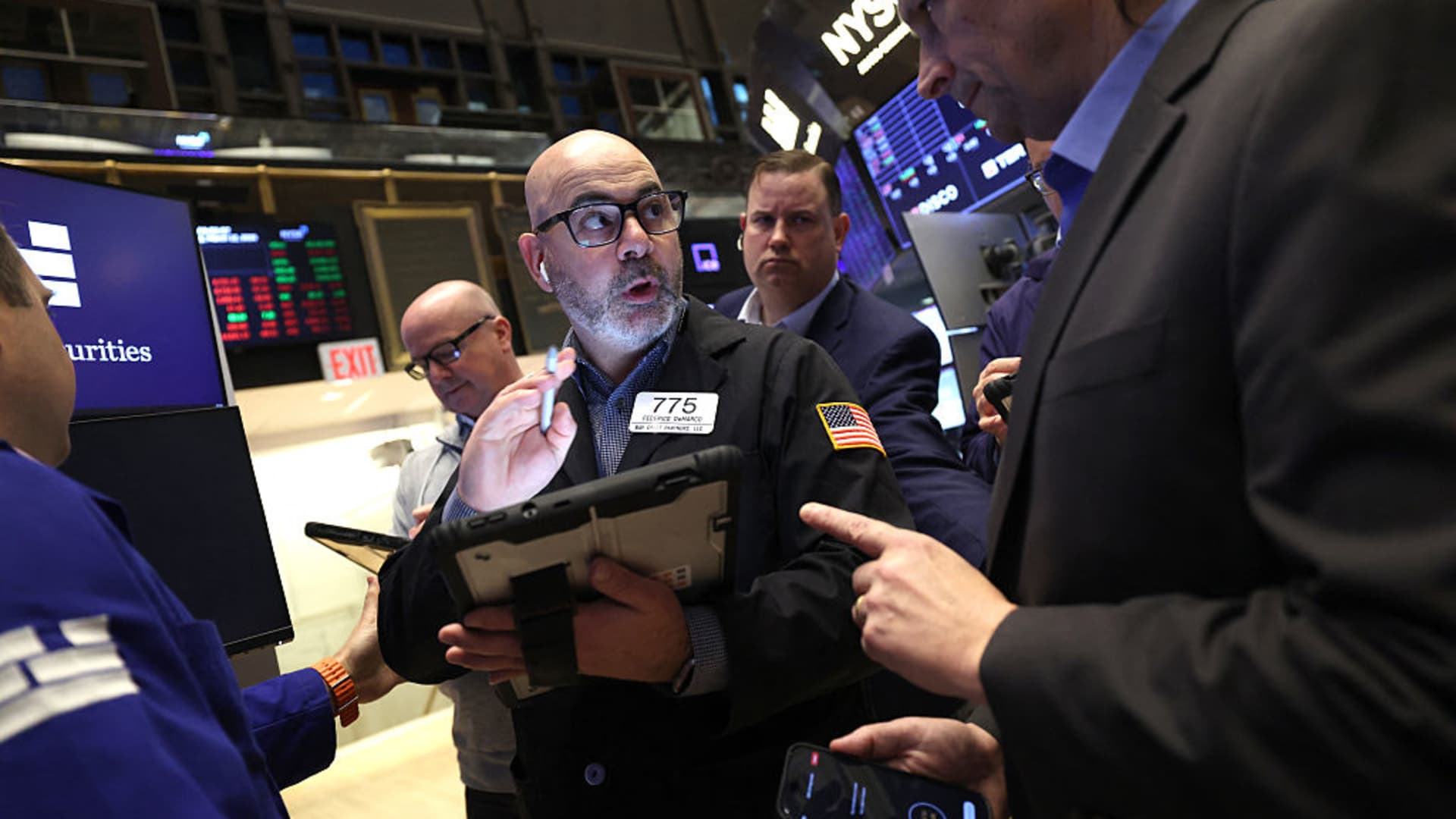
U.S. equity markets closed lower Friday as geopolitical tensions in the Middle East continued to drive oil prices higher, while Federal Reserve Chair Jerome Powell scored a major victory in court against what a judge called political interference.
The S&P 500 dropped 0.61% to close at 6,632.19, marking a new low for 2026 and leaving the benchmark index 5% below its recent peak. The tech-heavy Nasdaq Composite fell 0.93% to 22,105.36, while the Dow Jones Industrial Average declined 119.38 points, or 0.26%, to settle at 46,558.47.
For the week, the S&P 500 posted a 1.6% loss and notched its first three-week losing streak in about a year. The Dow slid approximately 2%, while the Nasdaq fell 1.3% over the same period.

Looking Ahead
Looking Ahead

Looking Ahead
Oil markets continued their recent rally, with West Texas Intermediate crude futures settling up 3.11% at $98.71 per barrel. Brent futures climbed 2.67% to $103.14 a barrel, having closed above $100 for the first time since August 2022 on Thursday.
The energy surge stems from ongoing concerns about the Strait of Hormuz, a critical shipping route that has been virtually shut since U.S. and Israeli strikes on Iran at the end of February. Iran's new Supreme Leader Mojtaba Khamenei has said the strait should remain closed as a "tool to pressure the enemy."


Defense Secretary Pete Hegseth sought to calm market fears during a Pentagon press briefing Friday. "We have been dealing with it, and don't need to worry about it," Hegseth said, dismissing concerns about the passageway's continued closure.
"We have been dealing with it, and don't need to worry about it,"
Looking Ahead
Looking Ahead
The oil price surge has heightened Wall Street fears of stagflation—a toxic combination of higher inflation and slower economic growth. These concerns have led investors to scale back expectations for Federal Reserve interest rate cuts, with fed funds futures no longer pricing in a September rate reduction.
"Earnings are pretty good, but sentiment is difficult," said David Aspell, chief investment officer of global macro at Mount Lucas Management. "The oil part of the sentiment and equity valuation embeds an interest rate path which is now being questioned."
"Earnings are pretty good, but sentiment is difficult,"
In a separate but significant development, Federal Reserve Chair Jerome Powell won a major legal victory when U.S. District Judge James Boasberg threw out Justice Department efforts to subpoena him. The judge characterized the move as political interference designed to pressure Powell into lowering interest rates or resigning.
"Did prosecutors issue those subpoenas for a proper purpose? The Court finds that they did not," Boasberg wrote in his ruling. "There is abundant evidence that the subpoenas' dominant (if not sole) purpose is to harass and pressure Powell either to yield to the President or to resign and make way for a Fed Chair who will."
Boasberg began his extraordinary ruling by citing numerous social media posts from President Trump pressuring Powell to reduce rates. "On the other side of the scale, the Government has offered no evidence whatsoever that Powell committed any crime other than displeasing the President," the judge wrote.
"On the other side of the scale, the Government has offered no evidence whatsoever that Powell committed any crime other than displeasing the President,"
The court decision represents a significant win for central bank independence, coming at a time when the Fed faces intense political pressure over its monetary policy decisions. Investors will be watching closely for any further developments in both the Iran situation and the ongoing political tensions surrounding Fed policy.